Pilot Projects

Emotion Analysis for Neurodiversity Students

A classroom pilot that monitors how emotional engagement shifts during reading and coursework. Educators can use this to refine curriculum, increase interactivity, and support stronger learning habits.

Active pilot · Classroom learning

Emotion Analysis for Neurodiversity Students

A classroom pilot that monitors how emotional engagement shifts during reading and coursework. Educators can use this to refine curriculum, increase interactivity, and support stronger learning habits.

During classroom activities, the Emotion Analysis pilot records how students respond to different learning materials over time. Session data includes neutral, positive, angry, and sad signals, plus a session happy index. This helps instructors see when content lands, when focus dips, and where activities may need redesign.

  • Real-time emotion cues during reading and coursework
  • Session trends stored for curriculum review
  • Insights that support more interactive classrooms
How the pilot works

Reading different content, recording a session of emotion

In a reading session with Lindsey Ye, each page presents different material. As she moves through the book, the monitor classifies facial cues in real time (neutral, positive, angry, or sad), stores those counts, and summarizes the session with a happy index and day vibe. Educators can review the pattern afterward to understand interest and strain across the activity.

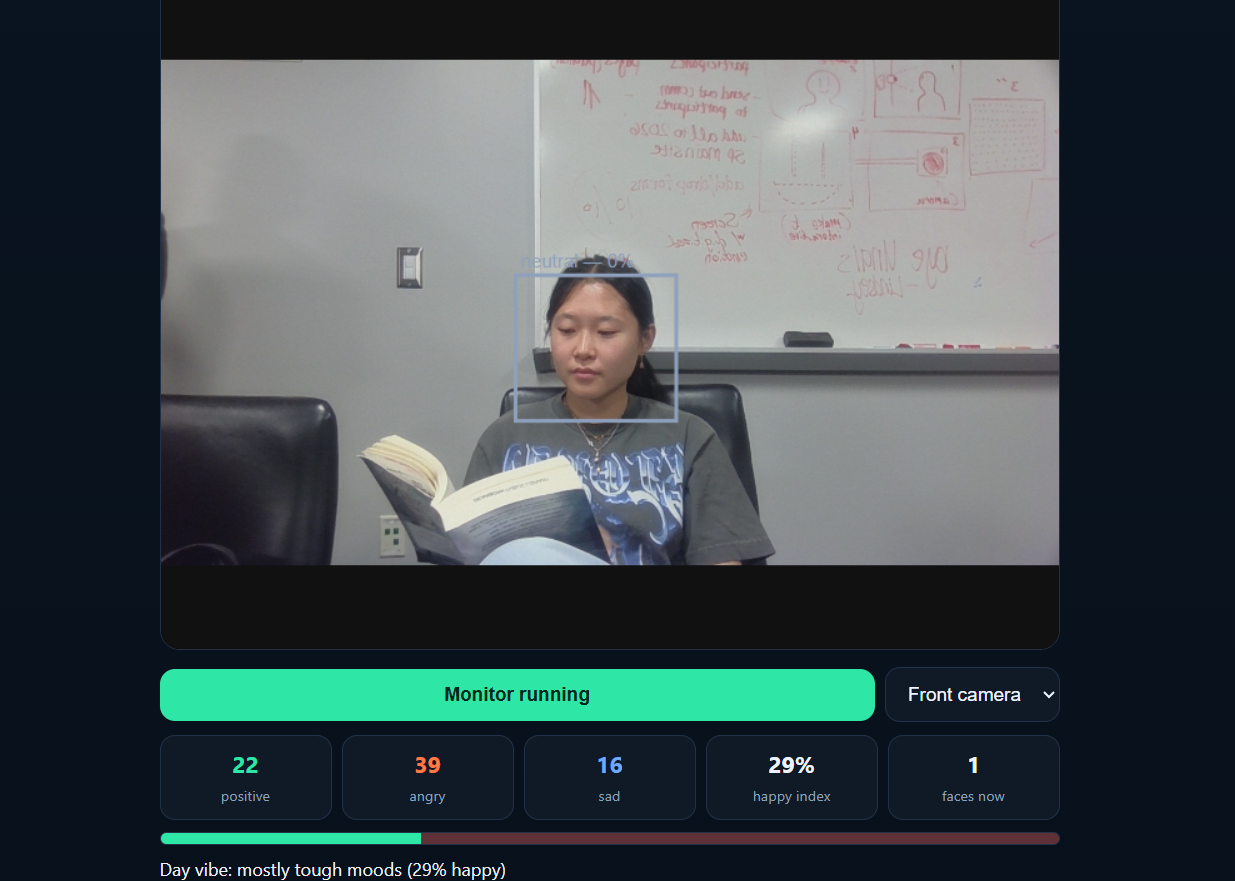
  • Emotion Analysis dashboard showing neutral detection during Lindsey Ye’s reading session.
    Neutral

    Lindsey Ye reads a page with a steady expression. The monitor labels the moment neutral and continues accumulating session counts.

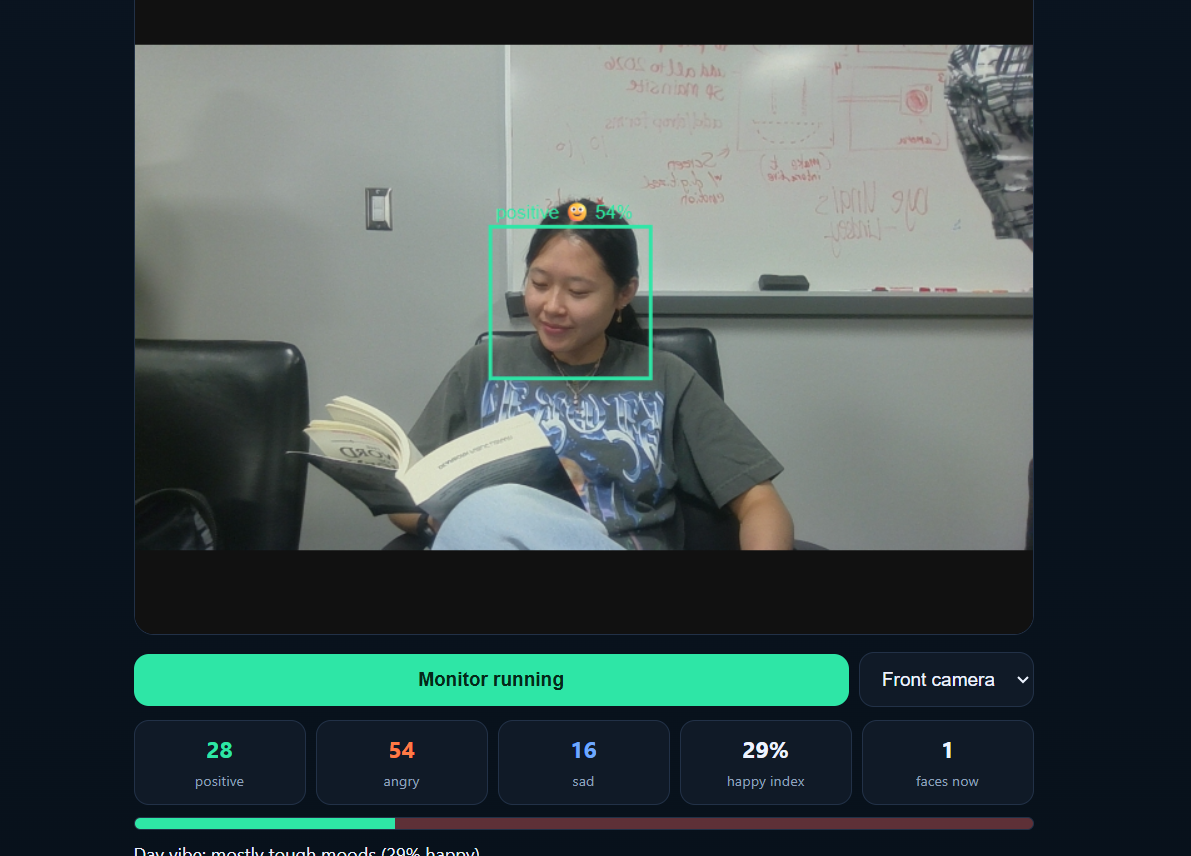
  • Emotion Analysis dashboard showing positive detection during Lindsey Ye’s reading session.
    Positive

    As page content shifts, the system detects a positive cue. Instructors can later see where materials sparked engagement.

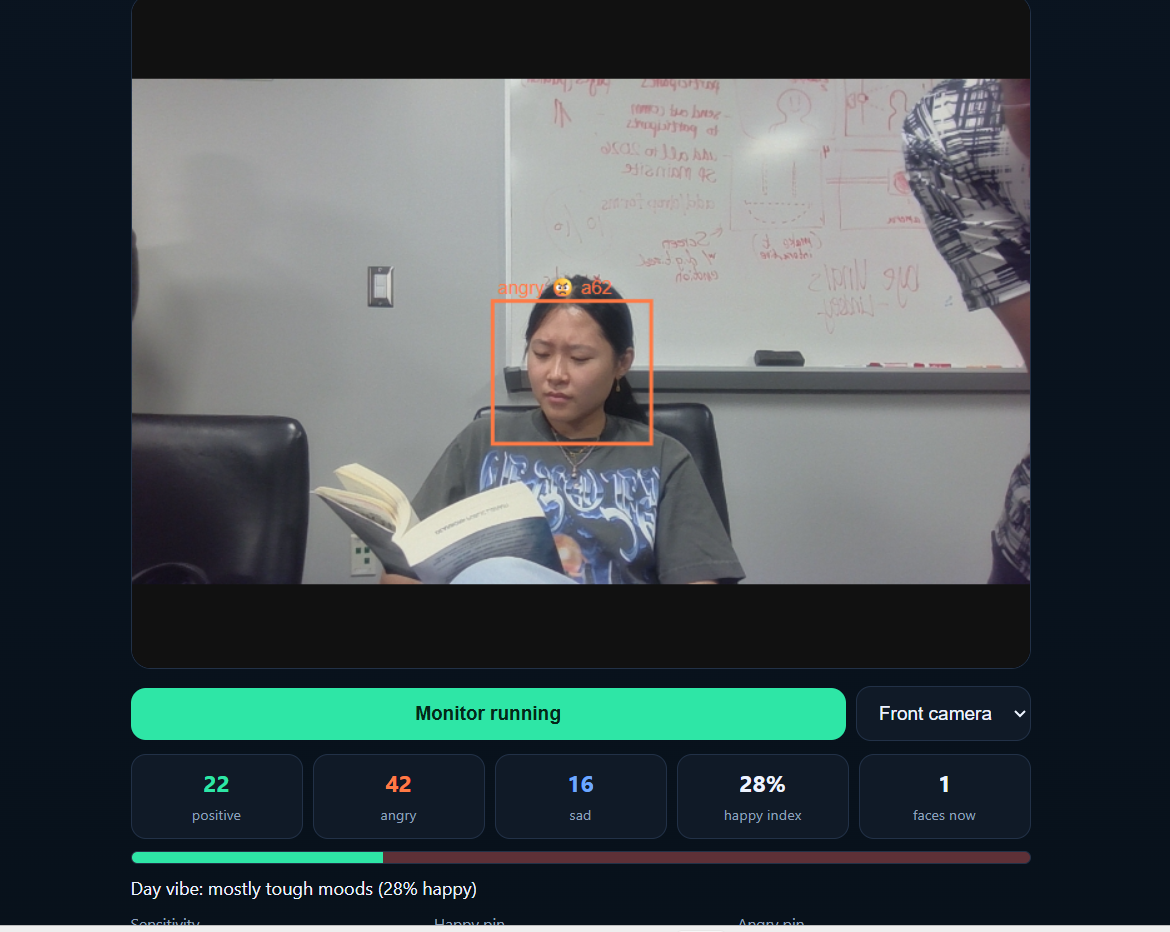
  • Emotion Analysis dashboard showing intense / frustrated detection during Lindsey Ye’s reading session.
    Intense / frustrated

    Tougher or denser content can register as anger or strain. Those moments flag where curriculum pacing or support may need attention.

Assignment journey

Anna at work: talking, chatting, and staying on task

The pilot also follows Anna while she works through an assignment. Conversation and chatting happen alongside the task; emotion analysis stays on throughout the journey so mentors can see how social moments and focused work interleave, not only silent reading.

  • Continuous monitoring across focused work and conversation
  • A fuller picture of classroom and study rhythms
  • Evidence that can guide coaching, pacing, and support
Anna works through an assignment while talking and chatting. The Emotion Analysis pilot tracks her emotional journey across the full work session.

Why it matters

From session data to better learning design

  • Improve curriculum

    See which passages and tasks correlate with tougher moods versus sustained engagement. Then revise materials with evidence, not guesswork.

  • Make classrooms more interactive

    Use session patterns to time discussion, breaks, or alternate formats when attention and affect begin to dip.

  • Strengthen learning habits

    Help students and mentors notice when focus drifts during reading or assignments, and design routines that rebuild momentum.

This pilot is exploratory. Visualizations shown here illustrate how emotion cues can inform teaching and learning design. They are not a clinical diagnosis and should be used alongside educator judgment and student voice.

← Back to Pilot Projects